Author Archives: Kendyl Salcito

Wine for Women’s Rights!

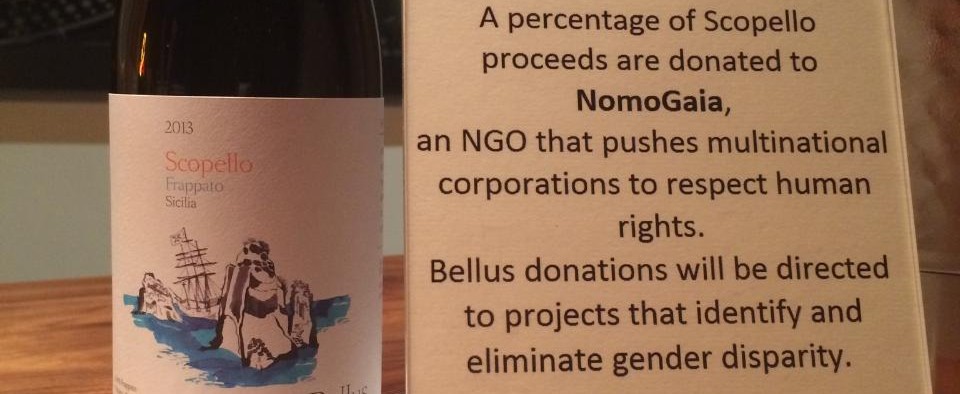
Yesterday Bellus Wines launched a new red and announced that proceeds will support NomoGaia.

The wine, “Scopello” is made with Frappato grapes from Vittoria, Sicily. Grapes are grown without chemical fertilizers, herbicides or pesticides, supplied by smallholder grape growers in the area. Bellus connects these producers to broader markets, supporting the Sicilian economy while protecting workers and the environment.

Bellus is a female-owned business dedicated to building relationships among working women and producing wine in a sustainable manner. It occupies a rare space in the agricultural supply chain where child labor is categorically absent and where eco-friendly growing and harvest techniques are inherent to the quality of products. (Full disclosure: Bellus is owned by my sister, Jordan Salcito.)

Contributions from Bellus to NomoGaia will support our work addressing gender disparities in project sites, helping ensure that women benefit equally from globalization.

Buy Scopello online at www.belluswines.com … who knew drinking could be so rights-friendly!?


What is human rights due diligence without human rights? A World Bank workshop

What is human rights due diligence without human rights? A World Bank workshop

While Mark was gallivanting with experts in Switzerland, Kendyl was back in DC at a World Bank meeting on a similar topic. The World Bank and SHIFT co-hosted an expert workshop on “Human Rights Due Diligence in Development” on September 16.

Mark’s meeting was interesting because the leading experts on HRIA for trade agreements agreed that no real methodologies had emerged for effective evaluation of the impacts of global trade on human rights. NomoGaia’s work was viewed as groundbreaking because, though it was oriented toward large-footprint projects, rather than bilateral trade, it involved actual, field-based evaluation.

Kendyl’s meeting was interesting because leading experts on HRIA for the World Bank suggested no methodology is needed.

As a development agency and an investor that has engaged with the UN Guiding Principles on Business and human Rights, the World Bank Group should, at a minimum, commit to “respect” human rights. That would require Bank projects to undergo evaluation for the human rights risks they pose to affected communities. As our past work on the World Bank’s Myanmar power sector investments has shown, no such due diligence is occurring, and major risks are present.

Why is the World Bank resisting human rights responsibilities? Politics are certainly an issue. One Bank insider lamented that country representatives call his office every week to influence him in one direction or another on the topic of human rights.

Perhaps another barrier is that the World Bank is receiving weak guidance on human rights due diligence. One participant at the workshop presented his most recent work on HRIA, on a project in a South Asian country. His findings depicted negative impacts, but his conclusions focused on the other players that posed equal or greater harms to human rights in the project area, not his company’s own impacts. His assessment methodology didn’t include engagement with rightsholders, but he represented this data gap as a regrettable necessity.

NomoGaia’s commitment to rightsholders through methodological rigor is what has made our assessments affect change. The companies with which we’ve worked have modified policies, adjusted operations and shifted perspectives. The World Bank clearly needs more evidence of good practice, and we are committed to providing that.

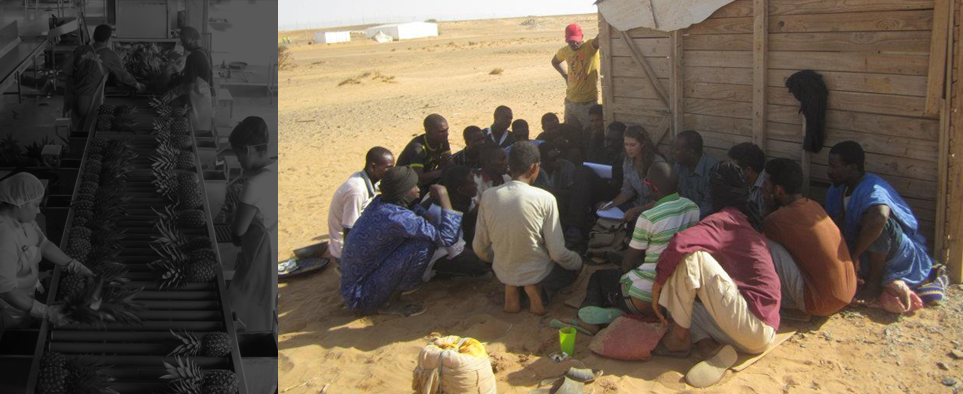
The right impact? Expert workshop on evaluating Human Rights Impact assessment (HRIAs) in trade and investment regimes

Trade and investment treaties are essential legal conduits of the world’s economy. In the rising tide of globalization and the rush to reduce trade barriers there is a countercurrent of opinion that freer trade often harms the most vulnerable. There has been a movement to use the human rights lens to identify those losing out in trade liberalization. Human Right Impact Assessments have been performed on various aspects of international trade and investment agreements. The human rights work in the area of trade and investment treaties has developed in parallel with the development of human rights impact assessment in the corporate sphere.

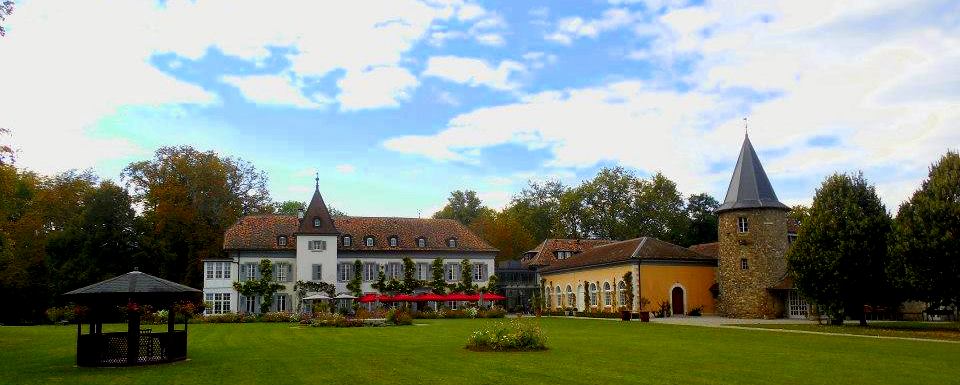
In order to connect these related, but separate discourses, Nomogaia was invited to participate in a high level expert workshop sponsored by the United Nations Office of the High Commissioner of Human Rights and the well-respected nonprofit Friedrich-Ebert Stiftung. The multi-day gathering included respected authorities from academia, government, NGOs and international institutions. It was called “Making the right impact? Expert workshop on evaluating Human Rights Impact assessment (HRIAs) in trade and investment regimes” and was held at a conference center outside of Geneva, Switzerland.

We were specifically invited to share NomoGaia’s experience with HRIA with the trade and investment treaty world. It was gratifying to hear NomoGaia called a “pioneer” and its work “ground breaking” and “inspiring.” There was keen interest in spreading NomoGaia’s learning, experience and techniques to the trade and investment realm.

Mark Wielga represented Nomogaia at this event. None of your donations were used to cover the expenses.

World Bank in Burma: What’s at Stake?

[nomogaia_download year=”2014″ month=”08″ file_name=”Human-Rights-Risk-Assessment-DRAFT-Thaton-WB.pdf”] Download the HRRA file (2MB)[/nomogaia_download]

In June we started fieldwork on a human rights risk assessment of a World Bank funded power plant project in Mon State, Myanmar. The new power plant will double the electrical output of the power plant without increasing emissions. As project documents note, “Thaton’s plant is more dangerous than other plants, and is in need of urgent improvement to meet international safety regulations.” There is a clear need to modernize Maynmar’s electricity infrastructure, and, done right, Thaton is a useful place to start.

However, there are also significant risks associated with carrying out development projects in a region that endured 60 years of active conflict, ending in a shaky peace agreement in 2012.

NomoGaia is assessing the human rights risks associated with Thaton, with the aim of empowering the World Bank to manage and eliminate them.

Our first-phase assessment is available here.

Human Rights Risk Assessment – DRAFT – Thaton – WB

The World Bank’s response, from June 2015 is available here.

WB response to NOMOGAIA

Myanmar in Pictures

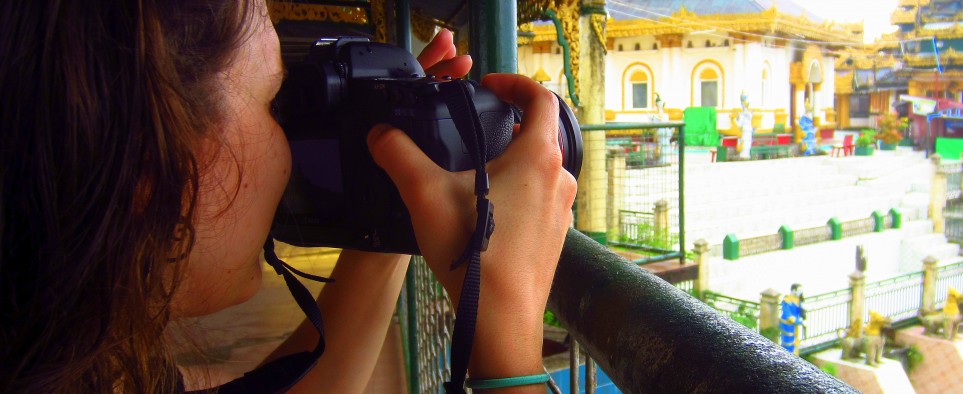
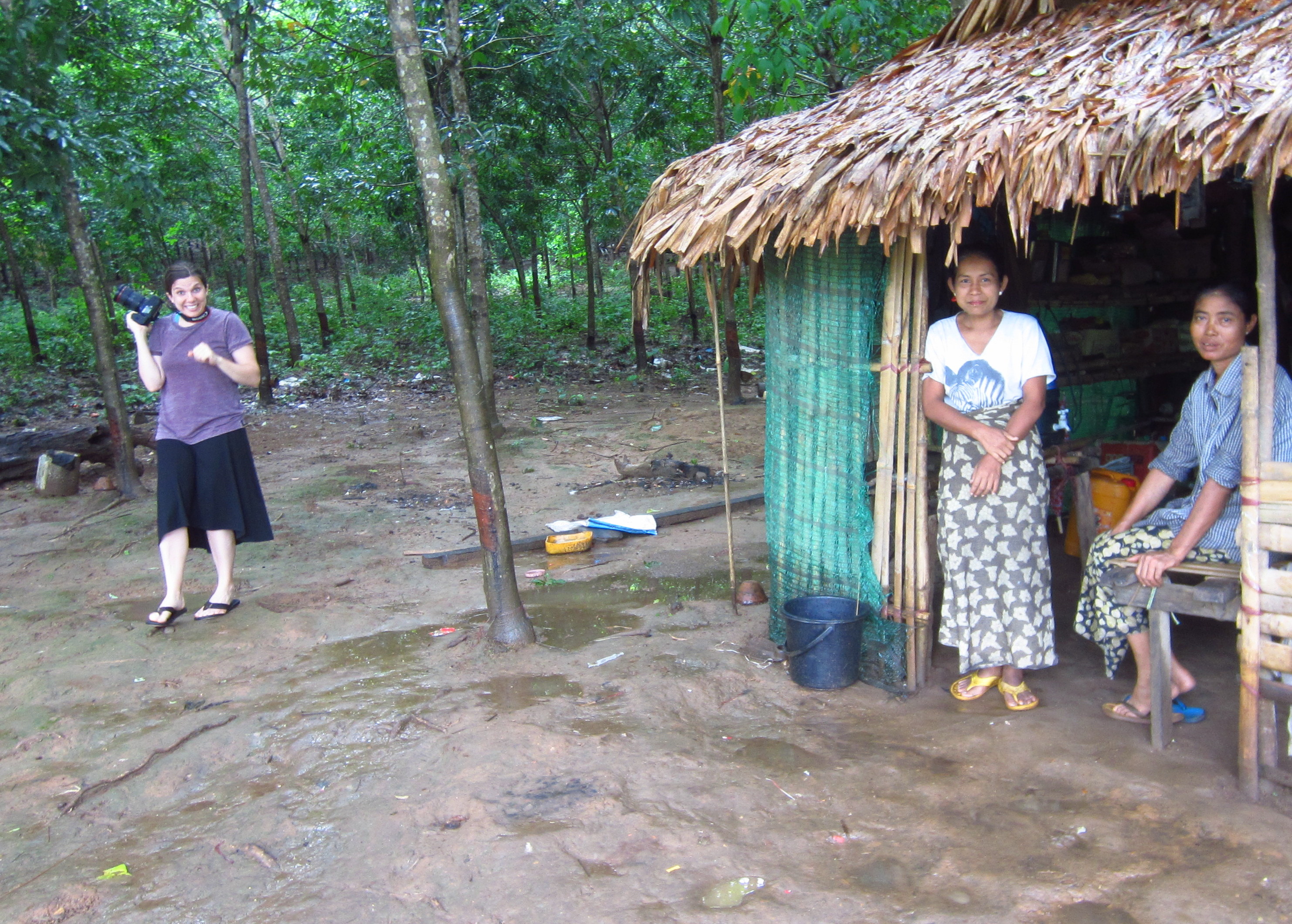
A picture isn’t worth 1000 words if you only take bad pictures. NomoGaia is short on talented photographers, but Rachel Greiman (artlessly pictured above) takes beautiful ones.

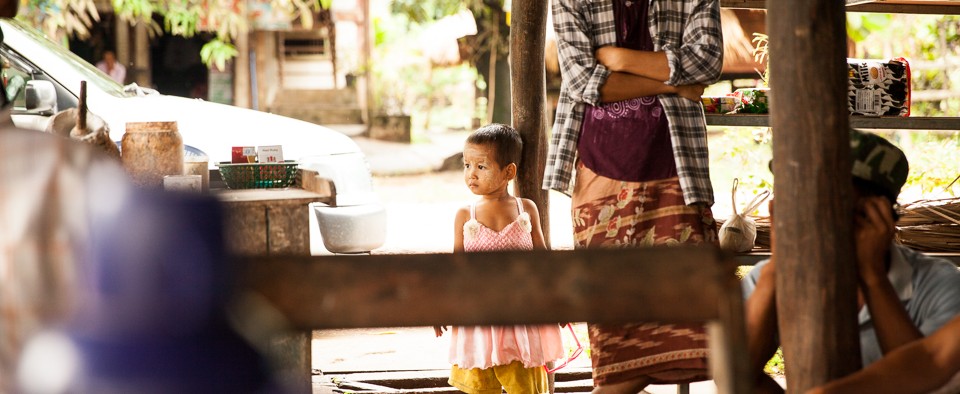
Learning wage rates and local expenses at a tea shop near Thaton

Learning wage rates and local expenses at a tea shop near Thaton

She has a knack for distilling rightsholder engagement into words and stillframes, both of which can be viewed at her website, www.greenchairstories.com, where she discusses some of our recent fieldwork in Myanmar.