
Author Archives: Kendyl Salcito

Money Talks: The ICCR and Human Rights Impact Assessment

Money Talks: The ICCR and Human Rights Impact Assessment

The Interfaith Center for Corporate Responsibility (ICCR) has an innocuous name but a dangerous mission: for over forty years it has been directly pressuring companies to be socially and environmentally responsible, making it one of the oldest corporate social responsibility players in the world. Its work started with a successful effort to get General Motors to divest from apartheid-era South Africa. As disinvestment from South Africa spread, it shaped the public discourse, facilitated policy shifts, and eventually made the apartheid government a non-viable state partner. Companies couldn’t do business with the regime, and apartheid fell.

Now, the ICCR guides members to pressure companies on issues like human trafficking, water, and labor conditions, just to name a few.

It has over 300 hundred members including religious groups, socially responsibility investment funds and managers, universities, public pension funds and labor unions. As shareholders in the companies they influence, these organizations work for change from within. They sponsor shareholder initiatives and, in some cases, withhold investment. ICCR and its members are knowledgeable and determined and have a remarkable record of long-term success. They also voice concerns with a moral authority that can get the attention, and respect, of senior management.

This year’s meeting included a focus on business and human rights, more specifically on Human Rights Impact Assessment and even more specifically on Nomogaia’s work. Our own Mark Wielga helped lead an intensive workshop on Human Rights Impact Assessment and then to address the entire group. His comments were enthusiastically received with warm praise for Nomogaia’s efforts, insight and values.

This invitation from such a highly respected organization is indicative that Nomogaia’s work remains important in the field of business and human rights. No donations were used to cover the costs of our participation.

(Photo: Syracuse Peace Council Collection)

A crony-owned zoo as a metaphor

A crony-owned zoo as a metaphor

Welcome to Mon State’s largest zoo.

IMG_9150Yup. Leopards, Elephants, Asiatic Bears and … Golden Retrievers.

This zoo is owned by a crony. While I feel pretty guilty for having gone in, I am confident my $0.50 isn’t lining anyone’s pockets. It’s also not going to animal welfare. These retrievers have sores on their sides and terrible diets.

If this is how zoos are run — by cronies, with pets masquerading as exhibits, on an absurdly low budget, resulting in misery for animals — is there a risk that there are parallels in infrastructure projects? Bare-bones budgets and corrupt crony management are a widely recognized problem in Myanmar.

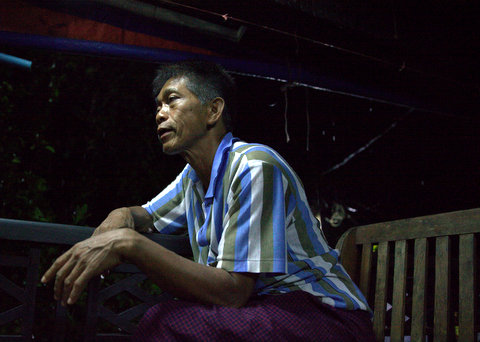
A worker told us about it.

What does foreign investment have to do with political and economic insecurity of workers?

The man not pictured above has had a long career at the Thaton power station, rising up the ranks from janitor to manager. He isn’t pictured because he has some observations about the workplace that could get him fired. Losing a government job would leave him virtually unemployable, blackballed from all technical positions in the region, given how closely allied this country’s business owners and government are.

But he wanted to talk about powerplant maintenance. The Thaton power station is in disrepair. Low-level workers and senior government officials describe it as past its prime. The last time the World Bank was engaging in Myanmar’s energy sector was 1992, 17 years after Thaton was constructed. At that time, Bank personnel wrote an electrification plan that slated Thaton for decommissioning in 2004.  That’s right, a decade ago.

In any circumstances, a 40-year-old power plant would be ripe for replacement, but the need is all the greater here, where maintenance has been woefully neglected. Development experts have suggested that this is a result of two decades of international sanctions that made parts unavailable. Workers suggest that it’s the result of corruption. Budgets for repairs and maintenance fell victim to graft at every level of administration – for every 20 cans of rust-resistant paint ordered, 10 go to senior management, 5 to the next layer of bureaucracy, 2 to the next and 1 to plant-level authorities. Only two actually arrive for the worker who is assigned to repaint the facility. Meanwhile, the rust is the least of anyone’s worries at Thaton.

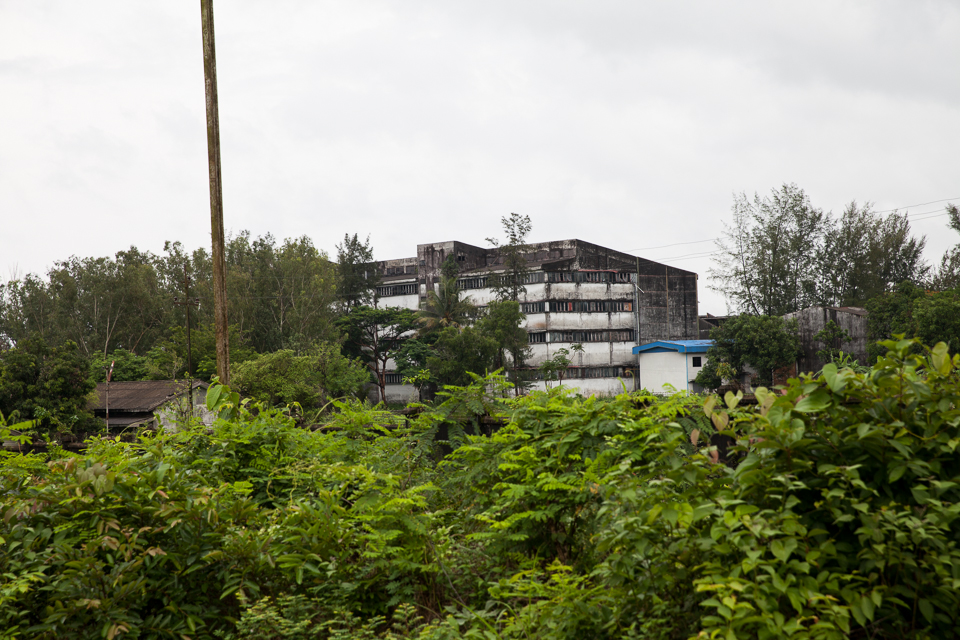
The original impetus for the Thaton Power station was this tire factory

The original impetus for the Thaton Power station was this tire factory

The decrepit plant neglected through graft is a time bomb. The water treatment facility sits idle atop pools of stagnant water where dengue- and malaria-carrying mosquitoes breed. The automatic emergency shut-off mechanisms to isolate fires and reduce safety risks have been broken for years, demanding vigilance from an under-trained workforce. A fire in the facility would be almost unstoppable at this point.

Replacing the facility will solve today’s urgent issues, but the replacement power plant will likely be subject to the same corruption risks, starting the cycle of disrepair all over again.

The World Bank has detailed and strict financial reporting standards, which should protect against such graft during the construction phase of the project. But financial institutions only have leverage as long as debts are owed. NomoGaia is analyzing ways to ensure that maintenance is conducted and worker health and safety is protected even after the World Bank’s role is complete. Early risk identification is the first step in that process.

Our current presence in Southeast Asia is contributing to a risk assessment that will become available in early Fall.

Why history and human rights should matter in financial risk analysis

Over mangoes and an energy drink with a longhorn-skull for a logo, our self-appointed village guide casually mentioned that he had told the military we would be coming to his rural village in the morning.

Our interpreter relayed this with a stony face. It was the first thing she brought up back in our car after the interview.

Her husband and our driver, the indefatigably brave, charming and socially conscious Shell, who spent 14 years in various of Myanmar’s notorious detention facilities as a political prisoner, heard the news and paused. “If I go to jail for this, it will have been in support of development for my fellow citizens.” Then he paused again and said, “But I’ve done worse – this won’t be the reason I go back to jail.”

This thought process was evoked by the mere idea of interviewing rural people about an electricity project – a gas-fired power plant replacement that the World Bank is funding.

Make no mistake, this power plant needs to be replaced – in its current state it is 39 years old, 17% efficient, and leaking hydrochloric acid and fuel into the surrounding soil. A new plant will double electric output, burn more cleanly, and avoid the HCl problem entirely.

But where energy is allocated when electric output doubles  is an important question. The district the power plant is located in was a conflict zone until two years ago, partially controlled by the Karen ethnicity’s army and totally closed to foreigners. The conflict between the ethnic Karen people and the Myanmar government dates back to an early separatist movement in 1949. Brutal government crackdowns perpetuated anti-government sentiments within the population, which resulted in ongoing violence until a ceasefire agreement was signed in 2012.

The fragile ceasefire has come under scrutiny as Karen people have begun questioning the Myanmar government’s commitment to their welfare. A project that benefits the ethnic majority while leaving this ethnic minority literally in the dark risks exacerbating old tensions.

On the flip side, a financial investment in electricity that raises the living standards of ethnic minorities could concretely demonstrate that the peace process has created a space for shared benefits between the Karen and Myanmar ethnic groups.

The military didn’t talk to us, though they sat across the street while we chatted with people and watched us as we left town. Shell promises to keep us posted and send us updates on his freedom. As we analyze the potential human rights impacts of this investment program, we’ll post more.

(Photo Credit: Rachel Greiman June 2014)

Why HRIAs can’t be a single, one-off study

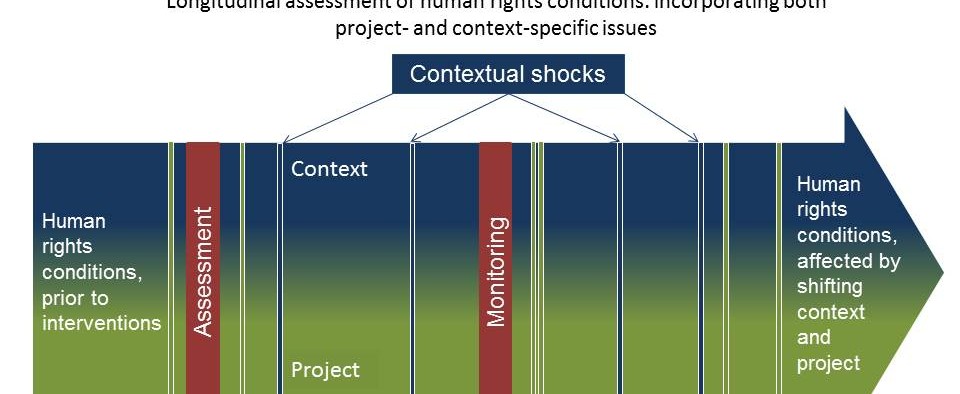
We’ve been assessing corporate impacts on human rights (“conducting HRIAs”) for six years. In that time, we’ve watched corporate projects respond to an incredible range of contextual changes, from the deaths of presidents to the loss of global aid, from market shocks to mass protests. What has become clear is that human rights conditions aren’t stable.

This isn’t, in itself, a particularly novel notion. But for companies, it has some real, on-the-ground meaning.

We wrote about the implications for companies operating in changeable contexts in the Environmental Impact Assessment Review — you can find that article here (subscription).

Hopefully our next article will be open-source, so readers won’t need an institutional log-in to see it.

If you’d like to read the article, email us!