Author Archives: Kendyl Salcito

How is the global business community responding to the UNGPs?

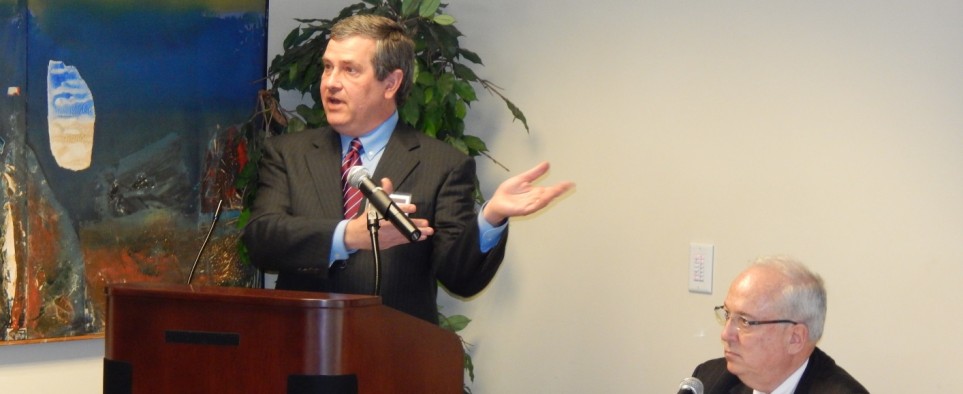
Last week American University’s Center for Human Rights & Humanitarian Law hosted an event to discuss the response of business to the UN Guiding Principles. Three years after Ruggie’s Guiding Principles received such a warm embrace from the international community, it’s time to examine the new state of play.

The event, co-sponsored by the International Bar Association, sought to share insights on progress to date, identify best practices and consider projections for the future of the Guiding Principles.

Senior manager for corporate responsibility at Hess Corporation, Gabriella Herzog, presented a corporate perspective from the energy sector, and Foley Hoag‘s Sara Altschuller brought a legal angle to the discussion.

Mark Wielga, with NomoGaia, was well positioned to comment on progress to date, as we have been developing a database tracking corporate human rights policies as businesses adopt the language of the Guiding Principles to commit to “respect” for human rights, the execution of “human rights due diligence” and the provision of “access to remedy” for individuals whose rights are negatively impacted by corporate actions. An overarching finding is that progress is slow.

The consistent message of all speakers was that many companies are actively confronting and determining how to create structures to implement the Guiding Principles, but that this construction is slow and challenging. The efficacy of the processes and actions overall remain uncertain, but the clear momentum is toward acceptance of the Guiding Principles in large, transnational corporations.


Why the World Bank should add human rights to its safeguard policies

NomoGaia was invited to participate in a panel at the U.S. House of Representatives Tom Lantos Human Rights Commission. The topic was human rights at the World Bank.

The World Bank has “safeguard policies” to help identify and minimize project-related harms to people and the environment, but these policies have never addressed potential adverse impacts on human rights.

The U.S. Congress has repeatedly called for the World Bank to advance the cause of human rights, and one of the most direct mechanisms to press for change is through funding mechanisms. An upcoming IDA replenishment period provides Congress with a crucial opportunity to insist on strong safeguard policies that ensure respect for human rights.

The briefing featured experts in the field of human rights that presented evidence of abuses in and around World Bank projects. NomoGaia presented information on ways in which the Bank could better support and advance human rights protections in its activities, through human rights due diligence.

Our presentation is available here.

How else do your donations advance the cause of business and human rights?

We’re in print! That piece we published in Environmental Impact Assessment Review garnered a fair bit of attention in the US, catching the eye of the State Department’s Bureau of Democracy, Human Rights and Labor.

We hope our writing for the Bocconi School of Business’s Journal on Economics & Management in Milan might have a similar effect in Europe. The article came out this month.

We have much more publishing on the way next year.

The beauty of publishing is that it costs NomoGaia nothing but raises our profile markedly. So why should you donate? Because our work is only note-worthy because it’s based on the fieldwork that no one else in the business and human rights sphere is producing for public scrutiny.

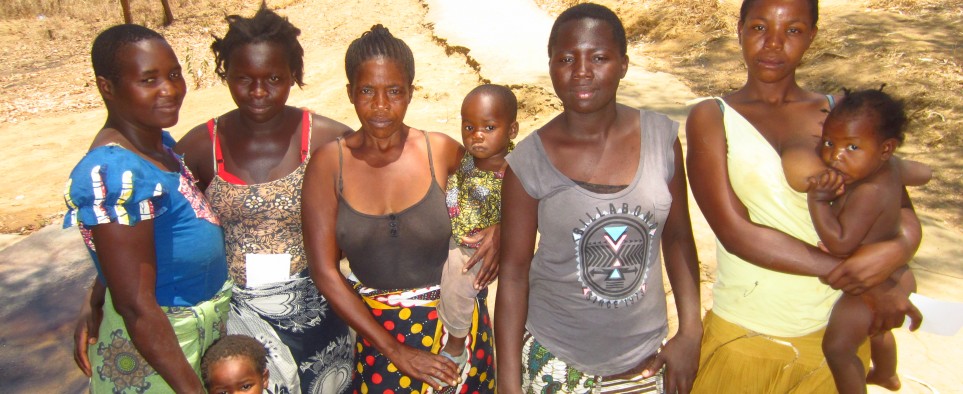
Why else? So that I can bring this photo back to these women of Kayelekera, as promised.

Why engaging with academia is neat

Day three of NomoGaia’s Fundraise-a-Palooza. You guys are holding up brilliantly.

Short and sweet.

What we did: Gave lectures at the American University School of International Service, Waseda University in Tokyo, and CU Law School.

Why it’s cool: Academia has come at business and human rights from the theoretical angle, but increasingly, business and law schools are reaching out for practical knowledge. Mark is co-teaching a class on business and human rights at the University of Denver Sturm School of Law this summer – a practicum presenting real world challenges faced by today’s companies.

These law and business students will become lawyers and business people … if they carry some lessons from NomoGaia’s learning to their next jobs, those may be companies that NomoGaia never needs to assess.

On top of that, academic institutions are building partnerships, hosting dialogs and raising the bar on discussions about business and human rights. One of the Professors Mark met at a workshop on Teaching Business and Human Rights at Columbia Law School will join Kendyl at a congressional briefing on business and human rights next week. The chains link up and the commitments grow stronger.  Huzzah!