Author Archives: Kendyl Salcito

Water: the human rights crisis HRW missed in Jordan

Last week Human Rights Watch published its 25th annual World Report, including a full chapter on Jordan. It tackled a range of civil and political rights violations but made no mention of Jordan’s most longstanding and systematic risk to human rights: water scarcity. The Middle East saw enough human rights violations in 2014 to fill a whole report on its own. As refugees have sought safe-haven from violent conflicts, many have fled to Jordan, where, HRW points out, they face a range of treatment, from forced detention, to denial of entry, to denial of refugee status. To hear Jordanians and authorities tell it, inhospitality is really incapacity: Jordan just doesn’t have enough water for the million-plus refugees that have poured through its borders.

Jordan is the fourth water-poorest country in the world, with aquifers being drained at an average rate of over 1 meter per year. Among registered Syrian refugees living outside of camps, one third receive water less than once per week. A survey of 40,000 refugee households published this month found that two out of every five households lacked toilet facilities or a shower.

Meanwhile, camps guarantee access to latrines and a minimum of 20 liters of water per day, actually putting refugees at higher water access levels than average Jordanians. Not surprisingly, this has caused resentment, and water conflicts have been reported in the northern regions where Syrian refugees are concentrated. The government has declared the capacity and quality of certain aquifers “state secrets,” making it impossible for Jordan’s already beleaguered journalists to report accurately on the country’s water crisis.

This may have contributed to the water sector’s latest boondoggle, a $1.1 billion project, funded primarily by US and European investment banks, which has recently been found to have only a fraction of the water reserves anticipated, and radiation levels that far exceed WHO standards.

Yet Jordan continues to use 60-80% of its water reserves for agriculture, which contributes 3% to GDP and primarily produces crops for export. Wealthy farmers sell oranges to Europe for profit, while Jordanian citizens and refugee populations scrape to find drinking water. Is the Right to Water being denied to civilians out of lack of water, or lack of will to reallocate resources?

World Bank Safeguards Review – Comment

World Bank Safeguards Review – Comment

In the 1980s the World Bank, recognizing that its development projects often came at an environmental and social price, developed a set of “Safeguards” aiming to protect vulnerable people and fragile ecosystems that might be affected by World Bank investments.

In July 2014, the World Bank released draft proposed updates of those standards, which are now being vetted through a global consultation process.

Although the safeguard review was billed as an effort to strengthen the safeguards to address 21st century challenges, instead we see significant weakening of the safeguards in the proposed updates.

NomoGaia submitted comments to the World Bank reflecting our practitioners view of these changes. Our submission to the World Bank is available below.

NomoGaia Comments on WB Safeguards Review

LAST DAY! On why leveraging companies’ power for human rights is a lot of bang for your buck

A favorite buzz word in international development is “scalability.” People want to know that, if $10 will make a difference in one life, then $1,000 will make a difference in 100 lives.

The average number of people directly affected by our fieldwork is about 1000, and it takes us roughly $6,000 to do a holistic analysis of human rights conditions to persuasively argue to a company that changes are needed.

But that’s not where the value of that study stops. Because NomoGaia publishes everything we do, we have the most copied methodology for human rights impact assessment in the world. If we were running a business, obviously that would be a problem.

We’re not. We’re doing this because we want to be copied. The more our work is recognized, the more leverage decision-makers have to push companies to be better.

By publishing our work in academic literature and putting our assessments online, this year alone we’ve secured the ear of the US Government’s Department of Labor and Rights, the UN  High Commissioner on Human Rights, the World Bank and the Tanzanian human rights commission, among others. These national and international decision-makers have a tool on hand to prove companies can do better because you’ve made our work possible.

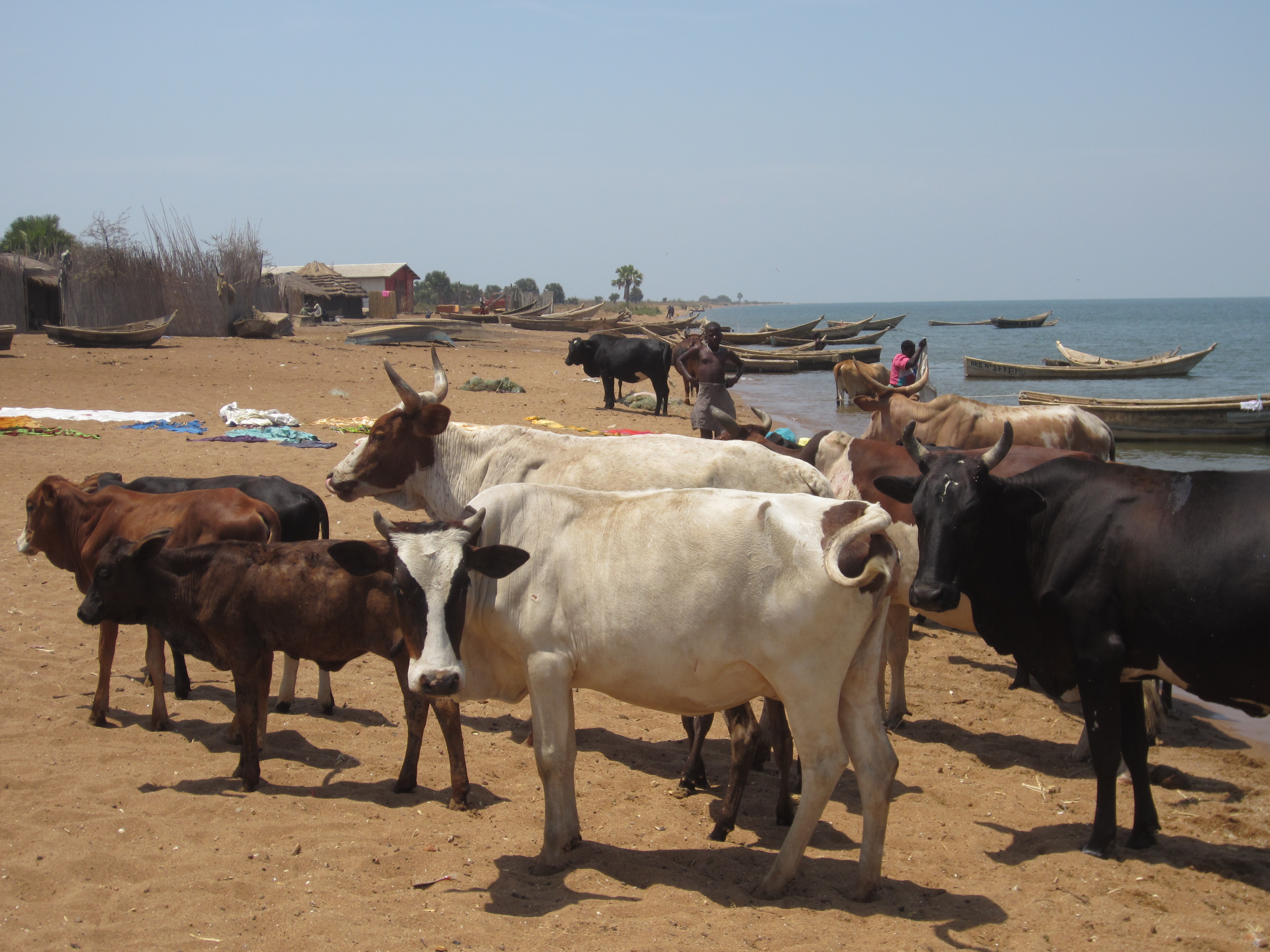
Your donations can protect this cattle's watersheds and grazing lands for its owner! But your donation can't donate her to anyone.

Your donations can protect this cattle’s watersheds and grazing lands for its owner! But your donation can’t donate her to anyone.

Your donation to NomoGaia will not ensure that any one child goes to school or that any one family has dinner this month. Instead, it will ensure that the school near any one of our research sites is sufficiently staffed and funded (by a company, not by you) to meet the corporate standard of “do no harm.” It will ensure that the wages of any employee or contractor at our research sites is sufficiently compensated to feed his family, pay school fees, fund transportation to seek medical care, and live in an adequate house. Your dollars to NomoGaia fund the research that elicits commitments from multinational corporations. These companies have the presence, financing and incentive to make lasting change for local communities, and we can make sure those changes happen.

Donate here!
Buy Scopello and make Bellus Wines donate!
Shop at Amazon and make Amazon donate!

Thank you, thank you, thank you for making it through this week and for being so generous with your support.

Day 4 – Monitoring is what makes companies change

Companies pay consultants for one-off assessments that can be put on a shelf and forgotten. As a nonprofit funded by individuals like you, NomoGaia can not only publish the human rights impact assessments we conduct, but we have donor funds to conduct follow-up monitoring to track changes in human rights conditions over time.

This year we carried out our fourth monitoring mission at a Green Resources plantation in Tanzania. In 2008 we found that wages were too low, housing conditions were too poor, and union busting was too rampant to meet human rights standards. We’ve found steady improvements every year since then.

IMG_3532

Conditions in local villages have improved markedly with our recommended wages increases. The lucrative forestry industry has brought new political power to the people of Uchindile, which they are using to secure improvements in schools, water access and other infrastructure. Housing conditions remain a challenge for workers living in dormitories – dormitories evaluated in previous years now meet human rights standards, but Green Resources’ newest dormitories are host to some of the same human rights violations that characterized previous assessments. The company has committed to make changes. As ever, monitoring will allow us to validate that commitment.
Read about it here!
Donate here!
Shop at Amazon and make Amazon donate!
Buy Scopello wine and make Bellus donate!

Day 3 – Happy Human Rights Day!

If human rights were part of financial due diligence…

… the US development bank, OPIC, might not have helped supply Jordanians with radioactive water.

Jordan is the second most water-poor country in the world, pumping just enough water to reach most Amman households for one day a week. It’s also resource poor, so relies on donors and lenders to keep its economy afloat.

The Overseas Private Investment Corporation, America’s development finance bank, joined with European banks recently to bankroll a new water supply project in Jordan.
It seemed like a winning plan — Jordanians get water, the government gets infrastructure, and lenders get to reap revenues from the project.
The Disi water pipeline was built without a full analysis of the human rights risks it could pose to Jordanians. Those risks, we found, were real.

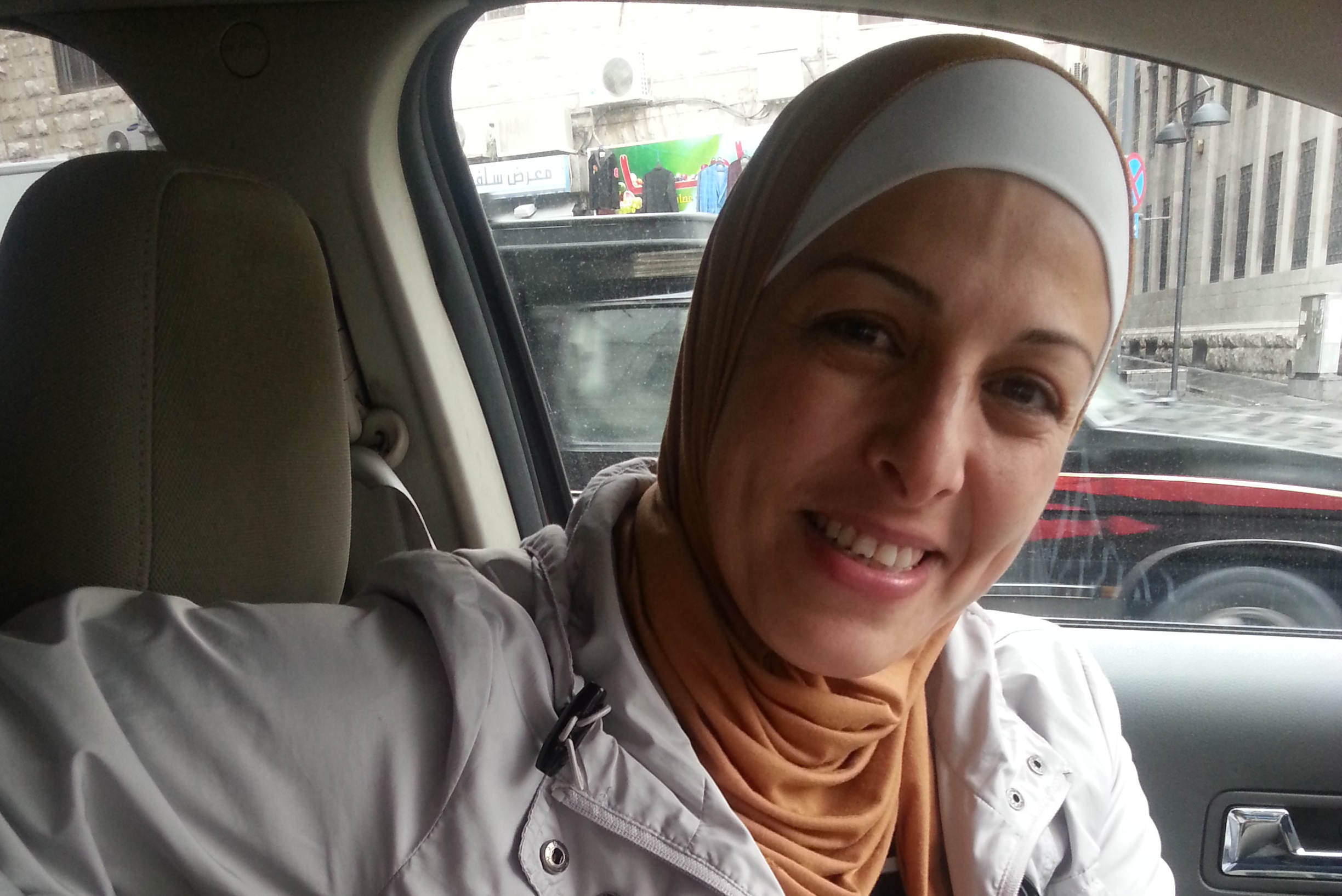
Reem, one of Jordan's finest reporters

Reem, one of Jordan’s finest reporters

Your donations helped us partner with an investigative water reporter, to go neighborhood to neighborhood looking at complex connections between civil disobedience and access to water. Beyond the politics of water allocation, we obtained water quality results revealing that Disi water radionuclide levels exceed safe levels. We can’t turn off the pipeline, but we can ensure that treatment processes are adequate to safeguard public health. That work is ongoing, while we also establish recommendations for financial institutions planning future engagement in Jordan’s challenging water sector.

Donate here!
Shop at Amazon and make Amazon donate!
Buy Scopello wine and make Bellus donate!