Pillar II


Corporate Accountability
Companies are tasked to ‘respect’ human rights wherever they operate. This has been their role since the signing of the Universal Declaration. In 2011, the Office of the High Commissioner of Human Rights achieved unanimous endorsement of the UN Guiding Principles on Business and Human Rights, clarifying how “respect” is demonstrated. The term “human rights due diligence” (HRDD) was coined to describe core tasks performed by rights-respectful companies:
(1) Making public commitments to do no harm to affected people.
(2) Evaluating impacts to demonstrate that commitments are being met.
(3) Remediating harms whenever they are identified.
(4) Advancing human rights performance over time.
How we help companies respect human rights
- Human Rights Policies
- Scoping of Human Rights Risks
- In-depth Assessment of Impacts on Human Rights
- Actions and Remedies
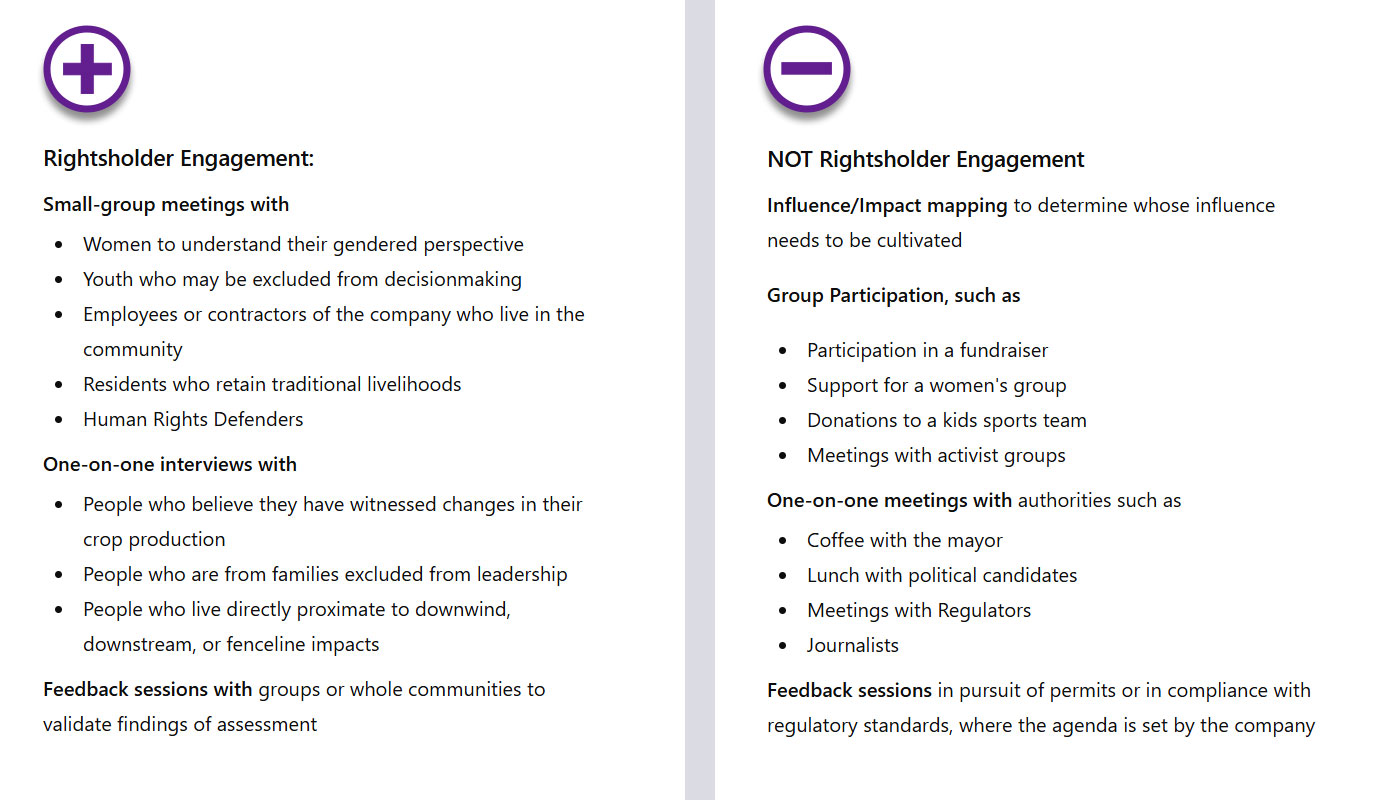
- Meaningful Engagement
- Human Rights Maturity
Corporate human rights policies are internal governance documents that lay out how a business operates. Our tools and samples help companies draft policies appropriate to their operations
01
The scoping of human rights risk and in-depth assessment of impacts are part of a continuum of effort. We provide detailed guidance on these processes.
02
03
IndicatorsADD MORE WORDS ABOUT INDICATORS HERE! DON’T FORGET!!!!
04
Companies can only remedy harms when they have identified the affected people and the root causes of harms. Recommendations and actions are rooted in the perspectives and knowledge of affected people
05